Add Row
Add Element
Tree Guardian News
update
Tree Guardian News
update
Add Element
  • Home
  • Categories
    • Storm Shield
    • Roots & Routes
    • Disease Detective
    • Insurance Intel
    • DIY Arborist
    • Futureproof Foliage
    • Pro-Partner Spotlight
    • Arborist Stories
    • Tree Care Blog
    • Tree Guardian News Blog
SUBSCRIBE TO NEWSLETTER 
  • update
  • update
  • update
  • update
  • update
  • update
  • update
June 07.2025
2 Minutes Read

Severe Thunderstorm Warning for Kansas: Protect Yourself from 80 MPH Winds

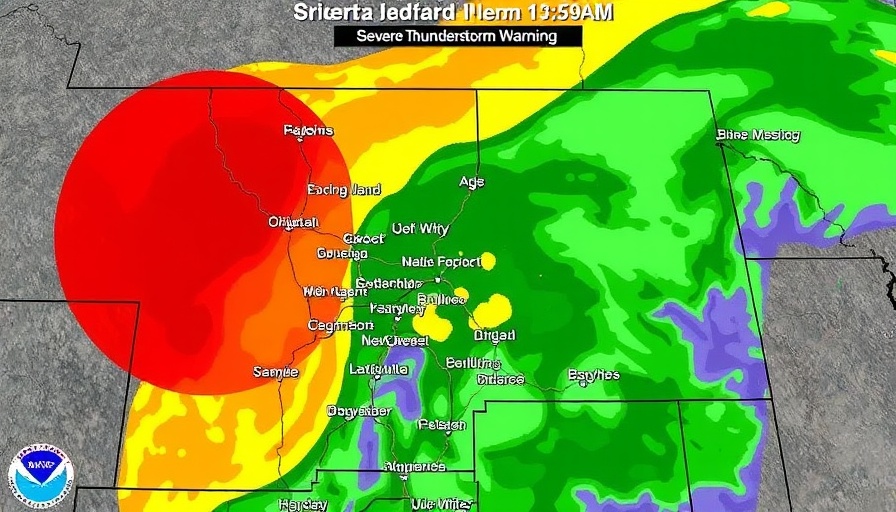
Severe Thunderstorm Warning issued June 7 at 1:49AM CDT until June 7 at 2:15AM CDT by NWS Wichita KS

Severe Thunderstorm Warning Issued for South-Central Kansas

On June 7, 2025, at 1:49 AM CDT, the National Weather Service (NWS) in Wichita, Kansas, issued a Severe Thunderstorm Warning for areas in east central Harper County and southwestern Sumner County. This advisory remains in effect until 2:15 AM CDT, prompting residents to take immediate shelter.

Understanding the Threats: What You Need to Know

According to radar reports, a severe thunderstorm was detected approximately four miles east of Anthony, Kansas, and is moving eastward at a significant speed of 55 mph. The storm is classified as destructive, with wind gusts reaching upwards of 80 mph. Such severe weather conditions can lead to dangerous flying debris, which poses a considerable threat for anyone caught outside or in mobile homes.

Residents are advised to anticipate major impacts, including damage to roofs, windows, and vehicles, alongside extensive tree damage and probable power outages. As this storm progresses, vigilance is crucial, and those living in the affected areas should remain alert for the potential development of tornadoes.

Safety Precautions to Follow During a Severe Thunderstorm

If you find yourself in the path of the storm, it is essential to move to an interior room on the lowest floor of your home. This minimizes exposure to high winds and flying debris. The NWS emphasizes that if you see a tornado forming, you should seek immediate refuge in a basement or a small, central room in a sturdy building.

For those interested in monitoring this storm and receiving updates, it is wise to check local media channels and the NWS website regularly. They provide real-time updates on any changes to the storm's path or further safety advisories.

Weather Preparedness: A Crucial Mindset

Severe weather events like this underscore the importance of being prepared for sudden storms. Creating a safety plan for yourself and your family can make all the difference during an emergency. Stay informed and make your safety a priority by reviewing your emergency contacts and ensuring your shelter plan is ready to go.

Storm Shield

42 Views

0 Comments

Write A Comment

*
*
Related Posts All Posts
01.18.2026

Emergency Alert Testing: Essential Insights for Arborists on Preparedness

Update Understanding the Importance of Emergency Alert Testing for Arborists As arborists, being in tune with emergency alert systems is crucial, particularly in situations that can impact tree care and safety. Recent tests conducted by the National Weather Service showcase the importance of these systems in preparing for unpredictable natural disasters that can threaten both urban and forested areas. On January 18, 2026, an official test alert was shared, underscoring the necessity for reliable communication channels when real emergencies arise. How Do Tests Improve Public Safety? The continuous testing of emergency warning systems—including the Wireless Emergency Alerts (WEA) and the Emergency Alert System (EAS)—plays a vital role in ensuring that these systems function as intended during crises. For instance, even a test alert serves to remind the public of the emergency systems in place and their importance. Regular tests help identify potential gaps, ensuring the message reaches everyone who needs it. Without these trials, any failure to deliver critical alerts during an actual emergency could pose severe risks. Best Practices for Emergency Systems Testing emergency systems effectively involves several best practices. Planners should communicate clearly with the public about when tests will occur, which minimizes confusion. Additionally, insights from past tests reveal that monitoring the effectiveness and reception of these alerts can lead to enhancements in how messaging is delivered, especially in areas traditionally less served by technology. Diverse platforms—from mobile apps to social media—should be integrated into the emergency response, further increasing communication efficiency. The Emotional Impact of Preparedness For arborists and all citizens, being prepared for emergencies goes beyond just knowing the protocols; it's about building trust in the systems that are there to protect us. The anxiety of a disaster can be overwhelming, but knowing that the warning systems are actively tested—and thus reliable—can instill a sense of comfort and community preparedness in even the busiest urban forests. This emotional assurance is not just beneficial—it can save lives. Keep Your Skills and Knowledge Sharp As we reflect on the importance of emergency tests, it's essential for arborists to stay informed about local emergency alert systems and engage with community preparedness initiatives. Understanding these systems can enhance your response strategies when tree care emergencies coincide with natural disasters. So, stay vigilant, participate in emergency planning, and keep your skills fresh. Ensuring that both our trees and communities are ready for anything is at the heart of effective arboriculture.

01.16.2026

Why Arborists Must Value Weather Alert Systems for Tree Safety

Update Understanding the Importance of Weather Alert Systems for Arborists In the life of an arborist, keeping trees healthy and safe is paramount, not only for the trees themselves but also for the surrounding environment and community. Thus, being aware of weather conditions is crucial. Weather-related events can impact tree health, particularly in storm-prone areas. Recently, various monitoring systems have been put in place to enhance public safety during severe weather situations. The Role of Emergency Alert Systems The National Weather Service (NWS) regularly conducts tests of its Emergency Alert Systems, aimed at ensuring all citizens are alerted during crises. For arborists, understanding these systems can provide invaluable information that aids in tree care. Knowing when severe weather such as high winds or snow is forecasted can help arborists proactively manage their work, ensuring the safety of themselves, the trees, and the public. Real-Life Application of Alerts In jurisdictions like Hawaii, the statewide siren and Emergency Alert System test is a staple of public safety preparations. Just as a fire alarm warns of immediate danger, these weather alerts can prevent tragedies and property damage by allowing arborists and other professionals to take necessary precautions. During these tests, sirens sound to alert residents, a critical measure for preparation. Why Arborists Should Stay Informed Incorporating weather alerts into an arborist’s daily routine can drastically improve decision-making. For instance, an alert about high winds could prompt arborists to delay tree trimming or removal projects, reducing the risk of accidents or injuries. Additionally, understanding the implications of weather changes can lead to better tree maintenance and health, as some trees may be more susceptible to damage depending on their location and conditions. Proactive Tree Care As part of being responsible caretakers of our natural surroundings, arborists should not only react to weather alerts but also be proactive. This means utilizing weather forecasts and alert updates to schedule tree work effectively and maintain tree health before storms hit. Such foresight can help mitigate the long-term impacts of extreme weather and support the ecological balance in the areas they serve. Conclusion: Embracing Preparedness for Safety In light of the importance of weather alert systems, arborists must remain vigilant and educated about these tools. Awareness and preparedness are vital for ensuring the safety of trees and the communities they serve. By integrating these weather alerts into routine operations, arborists can enhance their efficiency and nurture the natural beauty of their surroundings.

01.15.2026

High Wind Warning in Nebraska: Essential Insights for Arborists

Update High Winds Could Affect Arborists and Tree CareAs arborists in central Nebraska prepare for adverse weather conditions, a High Wind Warning has been issued from 9 PM CST tonight until 6 PM CST tomorrow. As outlined by the National Weather Service in Hastings, winds are expected to reach 30-40 mph, with gusts up to 60 mph, which poses significant risks.The Risks for TreesFor tree care professionals, the implications of high winds are profound. Such conditions can result in damaged trees, leading to hazardous situations for both the trees and their surroundings. Trees that are already weak or diseased may struggle to withstand these winds, making this a critical period for arborists to assess and prioritize tree maintenance and risk management strategies.Travel Safety and AdvisoryAlongside the risks to trees, travel may become treacherous as high-profile vehicles could be adversely affected by the wind. The potential for localized power outages further complicates the safety landscape, urging arborists and their clients to stay informed and be cautious during travel.Visual Hazards and Additional ChallengesMoreover, light snow showers expected during the wind event may cause reduced visibility, increasing the challenge for those on the road, especially arborists traveling for work or assessing storm damage. Safety protocols, including the use of proper gear and avoiding travel if possible, are crucial throughout this weather alert to mitigate potential risks.Expert RecommendationsIn anticipation of these conditions, arborists should consider implementing proactive steps—such as reinforcing tree structures or assessing for weaknesses—before the winds arrive. Staying updated through reliable weather sources will be vital as conditions can change rapidly.

Terms of Service

Privacy Policy

Core Modal Title

Sorry, no results found

You Might Find These Articles Interesting

T
Please Check Your Email
We Will Be Following Up Shortly
*
*
*