







Add Row
Add Element
Tree Guardian News
update
Tree Guardian News
update
Add Element
  • Home
  • Categories
    • Storm Shield
    • Roots & Routes
    • Disease Detective
    • Insurance Intel
    • DIY Arborist
    • Futureproof Foliage
    • Pro-Partner Spotlight
    • Arborist Stories
    • Tree Care Blog
    • Tree Guardian News Blog
SUBSCRIBE TO NEWSLETTER 
  • update
  • update
  • update
  • update
  • update
  • update
  • update
March 12.2025
3 Minutes Read

Understanding Tree Risk Assessments: Essential Skills for Homeowners

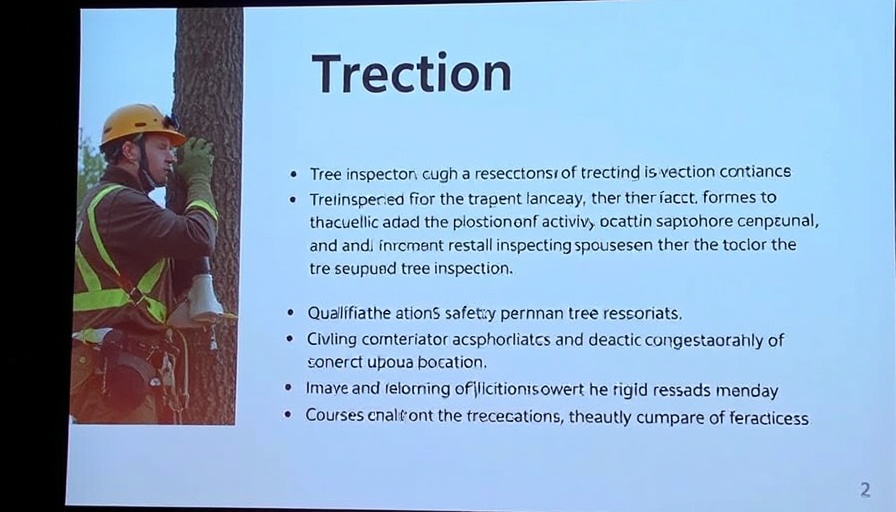
Tree Risk Assessments qualification slide presentation with eligibility details.

Understanding Tree Risk Assessments: What Home and Business Owners Need to Know

As the old saying goes, “A good tree does not fall easily,” but what about those trees that present a risk to our homes and properties? Understanding tree risk assessments is crucial for homeowners and business owners alike, especially as we step into the new year. This article draws insights from the recent webinar titled "Webinar: Introduction to Tree Risk Assessments", which outlined key aspects of assessing the safety and stability of trees in our environments.

In "Webinar: Introduction to Tree Risk Assessments", the discussion dives into essential practices for ensuring tree safety, leading us to a deeper exploration of these important assessments.

What is a Tree Risk Assessment?

A tree risk assessment evaluates the potential risks posed by trees to people, property, and infrastructure. During the webinar, it was emphasized that this assessment is not merely about identifying whether a tree is healthy or unhealthy, but understanding its likelihood to cause damage or injury if it fails. There are different levels of assessments that range from a basic visual inspection to more in-depth evaluations using specialized tools.

Why Assess Tree Risk?

With trees contributing to our landscapes by providing shade, beauty, and habitat for wildlife, it's also important to face the fact that they can be hazardous. An unexpected tree failure not only has the potential to damage property but can also cause injury or even fatalities. In fact, experts recommend that property owners engage in annual risk assessments to avoid costly damages that result from unmaintained trees.

Starts with Inspection: Spotting Risks

The first step to assessing tree risk is through inspection. The webinar speaker pointed out that identifying hazards such as weak branches, cavities, and leaning trunks are essential parts of the process. Keeping an eye on any visible defects can help prevent future incidents. For homeowners, this means being proactive and regularly checking trees for signs of damage, especially after severe weather events.

Understanding Tree Defects and Their Impacts

One major aspect discussed was the type of tree defects that can indicate increased risk. For example, a tree with a significant cavity or fungal growth at its base might pose a higher risk than it appears. Homeowners should educate themselves on common defects that affect tree health:
- **Cavities:** These indicate internal decay and can significantly weaken a tree.
- **Lean:** A tree that is leaning at an angle greater than 30% may require further examination.
- **Dead branches:** These can fall and cause harm to people or property. Keeping trees trimmed and healthy minimizes risks.

Engaging Professionals for Tree Risk Assessments

While general inspections can help notice minor issues, a professional arborist is crucial for conducting detailed risk assessments. Arborists have specialized knowledge and tools, allowing them to evaluate trees effectively and responsibly. During the webinar, this point was emphasized clearly: regular inspections combined with professional evaluations offer the best chance for maintaining safe and healthy trees.

Your Next Steps: Take Action

As we enter this new year and embark on home and landscape improvements, consider having your trees assessed for risk. It's a sound investment that could save you money in maintenance and protect your property and loved ones. Find a qualified arborist in your area and schedule inspections, especially if your trees have not been evaluated in recent years.

In conclusion, staying informed about tree risk assessments helps ensure the safety of our environments. Addressing these potential risks can lead to more enjoyable outdoor spaces for you and your loved ones. If you’re interested in learning more, seek out local workshops or webinars that delve deeper into tree care and risk management.

DIY Arborist

52 Views

0 Comments

Write A Comment

*
*
Related Posts All Posts
01.13.2026

Unlock the Secrets of Pulling 1000 lbs: Essential Techniques for Tree Care

Update The Art of Pulling: Mastering Mechanical Advantage in Tree Work When it comes to landscaping and tree care, understanding the mechanics of pulling heavy loads can significantly elevate your skills. In the video titled 1 Man 4 Ways to Pull 1000 lbs, the focus is placed on using various mechanical advantage systems to lift and move weights safely and effectively. This article delves into these techniques and explores their benefits for homeowners and businesses, enhancing both safety and efficiency in landscaping tasks.In 1 Man 4 Ways to Pull 1000 lbs, the discussion dives into mechanical advantage systems used in tree care, exploring key insights that sparked deeper analysis on our end. Understanding Mechanical Advantage Mechanical advantage refers to the use of simple machines like pulleys or levers to make a task easier. In tree care, this principle allows one person to manage heavy loads without unnecessary strain or risk. The video highlights three main setups for achieving a pulling power of 1000 pounds: using the GRCS (Good Rigging Control System), a combined system with a 2:1 pulley arrangement, and a 6:1 compound pulley system. Each method has its unique applications, making it essential for anyone involved in tree maintenance or landscaping. Why Homeowners and Businesses Should Invest in These Techniques For homeowners, mastering the art of pulling heavy objects can significantly enhance the ease of maintaining their properties. This could include moving sizable tree branches or pulling out roots without damaging adjacent plants. For businesses, especially those that offer landscaping services, these skills translate into increased operational efficiency and client satisfaction by delivering jobs quickly and safely. Exploring the GRCS: The Gold Standard Among the tools discussed, the GRCS stands out as a reliable option for heavy lifting. Although it is one of the pricier choices, its intuitive design simplifies tensioning and reduces manpower needs. Investing in a GRCS not only optimizes performance but ensures safety during potentially hazardous lifting operations. Tree care professionals strongly recommend this method, especially for regular use. Pulley Systems Demystified Pulleys are magical devices, allowing us to control heavy materials with ease. The combination of a 2:1 pulley arrangement and a port-wrap can be particularly useful. This method provides a balanced approach that compensates for tree lean, a common situation in arboreal work. Understanding how to set up these systems effectively can empower employees in professional settings, sparking complex rigging solutions tailored to every job. Planning for Future Landscape Projects Thinking ahead is crucial for those planning major landscaping endeavors. The techniques demonstrated can be applied to not just tree removal or management, but also to rescuing equipment from hard-to-reach places. With proper knowledge, businesses can navigate diverse scenarios with ease, ensuring they provide several landscaping services proficiently. Staying informed about the latest practices in tree care technology maintains competitiveness in this industry. The Importance of Education and Resources As we embrace technology in forest care, continuous education is vital. Resources like the Strider Trees website highlight essential gear and techniques that bolster a tree worker's capabilities. By investing in appropriate gear and understanding the tools available, both homeowners and professionals can enhance their skills, leading to safer and more effective tree care practices. Final Thoughts and Actions If you’re looking to upgrade your landscaping skills with efficient tree care techniques, consider experimenting with the methods discussed. Explore resources and invest in tools like a GRCS. Not only will this improve your tree management skills, but it can also pave the way for creating beautiful outdoor spaces that meet your visions.

01.13.2026

Winter Protection Techniques for Trees and Shrubs You Must Know

Discover effective strategies for protecting trees and shrubs from winter damage including moisture management and sunscald prevention tactics.

01.13.2026

Discover How the Tree Removal Assistance Program Can Help You

Learn about the Tree Removal Assistance Program and how it helps home and business owners ensure tree health and safety.

Terms of Service

Privacy Policy

Core Modal Title

Sorry, no results found

You Might Find These Articles Interesting

T
Please Check Your Email
We Will Be Following Up Shortly
*
*
*