Add Row
Add Element
Tree Guardian News
update
Tree Guardian News
update
Add Element
  • Home
  • Categories
    • Storm Shield
    • Roots & Routes
    • Disease Detective
    • Insurance Intel
    • DIY Arborist
    • Futureproof Foliage
    • Pro-Partner Spotlight
    • Arborist Stories
    • Tree Care Blog
    • Tree Guardian News Blog
SUBSCRIBE TO NEWSLETTER 
  • update
  • update
  • update
  • update
  • update
  • update
  • update
March 05.2025
2 Minutes Read

Severe Thunderstorm Warning for Central Alabama: What Residents Must Know

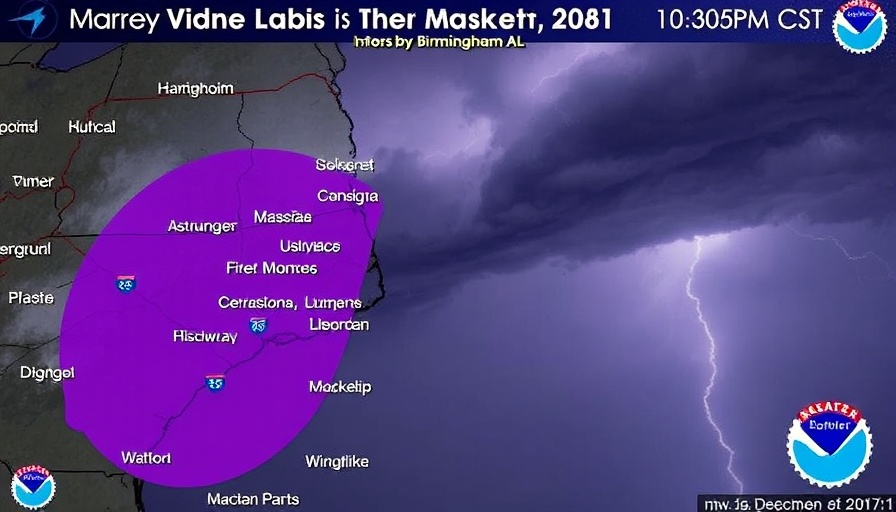
Severe Thunderstorm Warning issued March 4 at 9:30PM CST until March 4 at 10:45PM CST by NWS Birmingham AL

Severe Thunderstorm Warning in Central Alabama: What to Expect

On the evening of March 4, the National Weather Service (NWS) in Birmingham, AL, issued a severe thunderstorm warning for multiple counties, including Elmore, Montgomery, and Coosa. This warning, effective until 10:45 PM CST, indicates that severe thunderstorms were actively forming, with hazardous conditions such as 60 mph wind gusts identified by radar. It’s essential for residents in these areas to take immediate action for their safety.

Understanding the Threat of Severe Thunderstorms

The current atmospheric conditions show a troubling mix of high winds coupled with a line of storms pushing through the region. According to Alabama News Center, gusts have already reached 44 mph in Montgomery earlier in the day. This has raised the alert to an enhanced risk of severe weather across South Alabama.

While most areas report limited potential for tornadoes, brief isolated tornadoes could occur, particularly in southwestern Alabama. The tight pressure gradients are generating strong straight-line winds that pose a risk of downing trees and power lines. Residents are advised to secure outdoor objects that might be lifted by the wind.

Storm Preparation Tips for Residents

As the storms approach, it’s crucial to be prepared. An interior room on the lowest floor of your home is the safest place during severe weather events. The impact of these storms not only includes property damage but can also affect personal safety. Knowing what to do ahead of time can save lives.

As stated in the warning, affected locations include Bradford, Santuck, and Montgomery. Keeping informed through local weather updates and alerts will provide further safety guidance.

Future Weather Outlook and Ongoing Risks

Following this line of storms, Alabama can expect windy conditions to persist into the following days. James Spann noted the weather shifts until later in the week, where temperatures will cool significantly. However, for now, residents should focus on the immediate threat posed by the thunderstorms tonight.

This severe weather episode serves as a reminder of the dangers of storm season, which is upon us in Alabama. As we move into the spring, staying informed and prepared is key to safety in unpredictable weather.

To keep updated on these severe weather situations and for future alerts, consider signing up for notifications from local news stations and the National Weather Service.

Storm Shield

40 Views

0 Comments

Write A Comment

*
*
Related Posts All Posts
01.21.2026

North Dakota's Wind Advisory: Essential Guidance for Arborists to Safeguard Trees

Update Wind Advisory and Extreme Cold: What Arborists Need to KnowIn an alarming shift, the National Weather Service has issued a Wind Advisory for several counties in North Dakota, effective until 5 PM MST on January 21, 2026. Arborists and outdoor professionals should be especially cautious, as northwest winds are projected to reach 30 to 40 mph, with gusts hitting a staggering 55 mph. Such conditions pose significant risks, particularly for trees and other vegetation not adequately secured.Understanding the Impact of High WindsHigh winds can lead to severe damage, particularly to trees that may have weakened limbs or are already stressed due to recent weather conditions. Falling branches not only threaten property but can also jeopardize safe working environments for arborists engaged in tree maintenance or removal. Therefore, it's imperative for tree care professionals to conduct safety checks prior to venturing outdoors.Preparing for Extreme ColdThe advisory is coupled with an Extreme Cold Watch, warning of wind chills as low as 45 degrees below zero starting Thursday evening. Arborists, while prioritizing safety, should equip themselves with appropriate gear to withstand these frigid conditions. Insulated, layered clothing will be crucial for those needing to work outside during this extreme weather.Local Resilience in the Face of Nature’s FuryNorth Dakotans are no strangers to severe weather, and the community's resilience shines brightest amidst such challenges. As trees play a vital role in our ecosystem, the efforts of arborists become even more essential during harsh weather events, whether it's to clear fallen debris or provide protection to vulnerable trees.Safety First: Essential Action Steps1. **Secure Equipment:** Make sure all tools and equipment are secured to prevent them from being blown away or damaged.2. **Monitor Weather Updates:** Stay tuned to the National Weather Service for up-to-date information regarding wind speeds and temperature changes.3. **Communicate with Your Team:** Ensure everyone involved in outdoor operations is aware of the risks and prepared to act accordingly.4. **Limit Outdoor Work:** Where possible, put a hold on any non-essential tree care work until conditions improve.5. **Community Check-ins:** Reach out to fellow arborists and your local community members, especially the elderly, to ensure their safety during such harsh conditions.

01.20.2026

Why Arborists Should Monitor NOAA Weather Alerts for Tree Care Safety

Update Understanding the Importance of NOAA Weather Alerts for Arborists In the landscape of arboriculture, weather alerts play a critical role in ensuring the safety and sustainability of our green spaces. The recent test alert from the National Weather Service (NWS) highlights the vital importance of monitoring weather-related communications that can affect our trees, forests, and public landscapes. This is especially relevant for arborists who often work outdoors and must remain vigilant about changing weather conditions. Why Arborists Should Tune In: Weather Radio Saves Trees Arborists can gain immense benefits from using the NOAA Weather Radio system. This all-hazards network broadcasts vital information regarding severe weather events such as storms, floods, and the potential for insect infestations. Becoming acquainted with each alert type helps arborists prepare their trees for impending weather challenges. Access to data—especially in real-time—can enable proactive measures like reinforcing weak branches or rescheduling tree care activities to safer times. Test Alerts as a Necessity for Emergency Preparedness The recent test alert serves as a reminder that regular emergency test communications are crucial for public safety. The NOAA series of tests ensures that both equipment and protocols are functioning properly, preparing professionals and residents alike for actual emergencies. Arborists should stay informed about these tests and incorporate emergency preparation into their daily routine, ensuring that they are ready to take action for both personal safety and the care of their plants. The Bigger Picture: Impacts of Severe Weather As climate change continues to reshape weather patterns, the frequency and intensity of storms are increasing. Arborists should not only stay updated on current conditions but also study long-term forecasts available through NOAA resources. Understanding potential environmental threats can improve how professionals manage tree health in relation to severe weather, ultimately benefitting community landscapes. Take Action: Stay Alert and Engage with Communities Staying engaged with local weather updates isn’t just about safeguarding trees—it’s also about protecting communities. Arborists can establish relationships with local broadcast stations and participate in forums focused on weather awareness. By embracing these tools and resources, tree care professionals can elevate their practices in line with the evolving climate. Staying informed through these systems not only enhances an arborist's skill set but also contributes to broader community resilience amid climate uncertainties. Integrating a proactive weather awareness system into your professional toolkit is essential for successful arboriculture.

01.19.2026

Freezing Fog in Pendleton: A Critical Alert for Arborists

Update The Dangers of Freezing Fog: What Arborists Need to Know On January 18, a Special Weather Statement issued by the National Weather Service in Pendleton, Oregon, warned of freezing fog in specific areas along I-84. This low-visibility weather condition, dropping visibility to less than a quarter of a mile, poses significant hazards not just for motorists but also for professionals in tree care and management. Understanding Freezing Fog and Its Impact Freezing fog occurs when moisture condenses in the air and freezes upon contact with surfaces, leading to slick conditions on roads and potentially dangerous situations for all travelers. For arborists, these conditions can affect not only their safety but also the health of trees and the local environment. Visiting work sites in these conditions increases the risk of slips and falls, which can be hazardous when managing heavy equipment or climbing trees. Comparing with Historical Conditions Historically, Pendleton area has experienced similar weather events that resulted in significant travel incidents due to poor visibility and icy surfaces. For instance, previous conditions near Deadman Pass and Cabbage Hill have led to multiple vehicle accidents, highlighting the importance of cautious navigation during these weather advisories. Precautions and Best Practices For arborists and anyone working outdoors, it’s crucial to monitor weather alerts closely and to make informed decisions about traveling or working outdoors during freezing fog conditions. Here are some essential tips: **Always Check Weather Conditions:** Stay updated on local weather forecasts and heed any warnings issued by authorities. **Communicate with Your Team:** Ensure all team members are aware of the conditions and understand the risks involved. **Practice Caution While Driving:** If traveling is necessary, consider leaving earlier than planned and maintaining greater distances between vehicles to account for slippery conditions. By adhering to these tips, arborists can safely navigate the challenges posed by freezing fog while protecting not just their own safety, but the health of the trees they manage and the environment they work within.

Terms of Service

Privacy Policy

Core Modal Title

Sorry, no results found

You Might Find These Articles Interesting

T
Please Check Your Email
We Will Be Following Up Shortly
*
*
*