







Add Row
Add Element
Tree Guardian News
update
Tree Guardian News
update
Add Element
  • Home
  • Categories
    • Storm Shield
    • Roots & Routes
    • Disease Detective
    • Insurance Intel
    • DIY Arborist
    • Futureproof Foliage
    • Pro-Partner Spotlight
    • Arborist Stories
    • Tree Care Blog
    • Tree Guardian News Blog
SUBSCRIBE TO NEWSLETTER 
  • update
  • update
  • update
  • update
  • update
  • update
  • update
March 28.2025
2 Minutes Read

Bristol Community Farms Celebrate Resilience Amid Funding Cuts

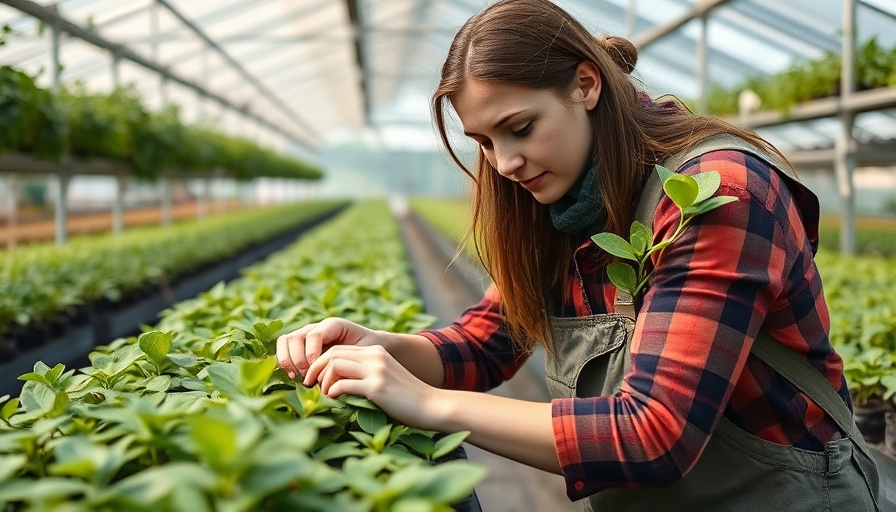
Farmer tending plants in Bristol community farm greenhouse

Joyful Resilience in the Face of Adversity

Despite the recent shock of funding cuts, Bristol’s community farms are determined to hold a “joyful celebration” at Sims Hill Shared Harvest. This community-supported agriculture model has garnered attention not just for its ecological farming but also for its community engagement. The collective strength and commitment of these local farmers are profoundly inspiring, especially when faced with significant setbacks.

The Ups and Downs of Small Scale Farming

Following a major victory in July 2024, when farms under five hectares were finally recognized for the Sustainable Farming Incentive, the abrupt closure of subsidy applications on March 10 has left many growers reeling. The farming community, which typically relies on these funds to support sustainable practices, is searching for alternative means to ensure their operations continue. The financial implications for small farms like Sims Hill are stark, particularly when they calculate a loss of over £1000 that could have significantly impacted their operational capacity.

Community Impact and Emotional Resilience

Sims Hill provides more than just organic produce; it fosters community connections through vegetable box subscriptions and volunteer days. The emotional toll of losing expected funding is compounded by the community's dependence on their outputs. According to Bekki Pugh of the Connecting with Nature program, the need for strong local food systems has never been clearer. The work they do reduces isolation and enhances community cohesion, a vital aspect of mental health recovery for many members.

What’s Next for Bristol’s Farms?

As Bristol’s farming community looks toward the future, they embody resilience and adaptability. While the current financial and regulatory landscape remains uncertain, the collaborative spirit and determination among growers is palpable. They are exploring partnerships and local fundraising opportunities to bolster their sustainability efforts. If these farms can rally community support, they may yet thrive against the odds.

As local homeowners, consider investing in your community’s food systems by choosing to support these farms through subscription services or volunteer opportunities. Join the movement toward sustainable agriculture while nurturing local connections that keep our community vibrant.

Futureproof Foliage

83 Views

Write A Comment

*
*
Related Posts All Posts
02.18.2026

Could Stability Replace Growth in Our Communities? A Homeowner's Perspective

Update Shifting Paradigms: From Growth to Stability As homeowners, the landscape of our shelter and security is not just defined by our properties but also influenced significantly by broader societal values. The recent discussion initiated by Nate Hagens about transforming societal priorities from relentless growth to stability opens critical questions: how might this shift impact our lives? In a world where economic growth often drives decision-making, would prioritizing stability lead to a more secure home environment? Hagens proposes that stability could fundamentally alter our cultural compass, leading to a society that values continuity over competition. Understanding the Role of Purpose in Society Another intriguing element Hagens discusses is the concept of purpose—or the lack thereof—in modern life. This absence can trigger societal unrest, influencing political behaviors that ultimately affect homeowners. When individuals feel disconnected or without direction, they may turn to divisive politics or unstable community dynamics. Addressing these societal issues may, therefore, be essential for fostering neighborhoods that feel secure and cohesive, ensuring homeowners aren't just protecting their property but are also actively investing in their communities. The Impact of Technology on Our Values Furthermore, the rapid advancement of technology, specifically Artificial Intelligence (AI), is reshaping how we interact and perceive our realities. As homeowners, the integration of AI in everyday life can enhance conveniences—such as smart home systems—but it also raises concerns regarding privacy, security, and dependence on technology. Can the push for technological progress exist alongside a commitment to stability? Understanding the balance between innovation and societal values will be vital in shaping our residential experiences in the coming years. The Questions We Need to Ask What happens next in our society may not solely depend on the answers we find, but more importantly, on the uncomfortable questions we choose to confront. For homeowners, this could mean reevaluating what ownership and community truly mean. How do we define success in a world eager for growth? Would we trade some personal gains for collective stability? These questions are critical as they invite reflection and potential transformation in our residential and communal ideals. Moreover, as we face environmental challenges and shifting demographics, including higher demands on our natural resources, the implications are profound. Conclusion: A Call to Action for Homeowners In these unstable times, it is essential for homeowners to engage with the evolving discourse surrounding growth and stability. Understanding these dynamics not only aids in navigating personal and financial decisions but also fosters a proactive approach to building resilient communities. Embrace these uncomfortable questions and think about how the answers can guide actions—both for individual homeowners and broader neighborhood collaboration. Taking an active role in discussions about stability can contribute to meaningful changes that enhance our homes and communities.

02.16.2026

Why Homeowners Should Care About Ozone Layer Threats and Solutions

Update The Hidden Dangers in Our Chase for Solutions In the late 20th century, the introduction of chlorofluorocarbons (CFCs) seemed like a remarkable advance in technology. They were celebrated for their efficiency in refrigeration and as propellants in aerosol cans. Yet, pioneering research led by chemists F. Sherwood Roland and Mario Molina discovered a dark side: CFCs posed a significant threat to the ozone layer, which protects the Earth from harmful ultraviolet radiation. This alarming discovery galvanized international action, culminating in the Montreal Protocol, an agreement that aimed to phase out substances harmful to our ozone layer. Unintended Consequences of Our Solutions Despite the noble intentions underlying the Montreal Protocol, the “solution” to CFCs led to the introduction of hydrochlorofluorocarbons (HCFCs), which still had some potential to damage the ozone layer. These were eventually replaced by hydrofluorocarbons (HFCs), marketed as safer alternatives since they contain no chlorine. However, as recent studies have shown, both HCFCs and HFCs degrade into trifluoroacetic acid (TFA), a seemingly innocuous chemical that poses serious health risks to humans and wildlife, threatening our safety and the environment. The Regulatory Landscape and Ongoing Efforts Recognizing these dangers, the U.S. Environmental Protection Agency (EPA) has begun phasing down HFCs under the American Innovation and Manufacturing (AIM) Act, emphasizing the need for regulatory action to protect the ozone layer. The EPA has noted that we are making progress—the ozone layer is on track to recover by about 2065, largely due to international cooperation reflected in the Montreal Protocol. The Montreal Protocol: A Model for Future Environmental Action The success of the Montreal Protocol serves as a crucial example of how global collaboration can lead to significant environmental improvements. According to the United Nations, nearly 99% of ozone-depleting substances have been eliminated as a result of this treaty. Not only are we witnessing a reduction in harmful emissions, but studies indicate that efforts to restore the ozone layer have also contributed to slowing climate change—a remarkable achievement that highlights the interconnectedness of environmental protection strategies. Future Innovations and Vigilance Needed Looking ahead, it is vital to remain vigilant. While alternatives like hydrofluoroolefins (HFOs) are being introduced into the market with claims of being environmentally sustainable, research reveals that some of these compounds also produce TFA. This pattern underscores the point made by Eric Sevareid: “The real cause of problems is solutions.” If we wish to protect both human health and the environment, we must scrutinize these solutions rigorously before implementing them. Implications for Homeowners and Local Communities As homeowners, understanding the products we use—whether in HVAC systems, refrigeration, or household aerosols—is crucial. Sharing knowledge about environmentally responsible practices can lead to community-wide initiatives supporting tree care and better landscaping options that improve air quality and environmental health. By opting for solutions that prioritize both function and environmental impact, we can contribute positively to our surroundings. In summary, as we reflect on the history of chemical use and its regulation, it becomes clear that careful, evidence-based approaches are essential in our quest for solutions. As we continue this journey toward environmental safety, let’s remain committed to sustainable solutions, celebrating achievements while remaining cautious of the potential pitfalls that lie ahead.

02.13.2026

CO2: The Surprising Keystone of Our Planet's Ecosystem and Homeowner Responsibility

Update The Vital Role of CO2 in Earth’s Ecosystems Carbon dioxide (CO2) is frequently framed as the villain in environmental discussions, primarily due to its link to climate change. Yet, CO2 is integral to life on Earth, serving as a foundational element in the very fabric of our existence—from the food we consume to the habitats we inhabit. Its role in the carbon cycle is not merely one of excess but is critically tied to the functionality of ecosystems that regulate our environment. Understanding the Carbon Cycle The carbon cycle is a natural sequence of processes that move carbon among the biosphere, geosphere, hydrosphere, and atmosphere, making it crucial for maintaining life. Carbon exists in various forms: from CO2 in the atmosphere to organic matter in plants and animals. It’s noteworthy that while the current atmospheric CO2 levels have increased dramatically due to human activity—mostly from fossil fuel combustion—the cycle itself has historically been maintained by natural processes. The balance of this cycle is essential to keeping our planet habitable and resilient. Lessons from History: The Carbon Cycle and Mass Extinctions Historical data indicates a strong relationship between CO2 levels and major events in Earth’s history, including mass extinctions and climate shifts. For instance, fluctuations in CO2 concentrations are believed to have contributed to transitions between ice ages and interglacial periods, illustrating its role as a climate feedback mechanism. Understanding these historical patterns allows us to appreciate the urgency of addressing today’s growing CO2 emissions, as failing to stabilize these levels could lead to devastating impacts on biodiversity. Your Role as a Homeowner in Carbon Management As a homeowner, you might wonder how you fit into the larger picture of carbon management. Simple actions can be powerful: from planting trees that absorb CO2 to adopting energy-efficient practices that reduce emissions, every effort counts. Engaging in tree care and responsible landscaping not only beautifies your property but also supports the ecological balance essential for maintaining healthy carbon levels in our atmosphere. Act Now: Embrace Sustainable Practices Understanding the dual nature of CO2—as both essential for life and a contributor to climate change—empowers individuals and communities to make informed decisions. Sustainable homeownership, such as integrating tree care practices and investing in renewable energy solutions, can significantly impact carbon footprints. Not only does this contribute positively to the environment, but it also ensures a healthier ecosystem for future generations. Join the movement towards sustainability. Assess your home’s carbon impact and consider the changes you can make today. By understanding and nurturing our relationship with carbon, we can navigate the challenges of climate change.

Terms of Service

Privacy Policy

Core Modal Title

Sorry, no results found

You Might Find These Articles Interesting

T
Please Check Your Email
We Will Be Following Up Shortly
*
*
*