







Tree Guardian News
update
Tree Guardian News
update
  • Home
  • Categories
    • Storm Damage & Prevention
    • Tree Care Tips & Landscaping
    • Tree Disease Identification & Treatment
    • Insurance Intel
    • DIY Tree Care & Safety
    • Sustainable Tree Care & Eco Solutions
    • Professional Tree Services
    • Arborist Stories
    • Latest News
    • Industry Insights
Arborist Get Featured 
  • update
  • update
  • update
  • update
  • update
  • update
  • update
April 08.2025
2 Minutes Read

Exmark's Redesign of the Lazer Z E-Series Zero-Turn Mowers Offers Exceptional Value

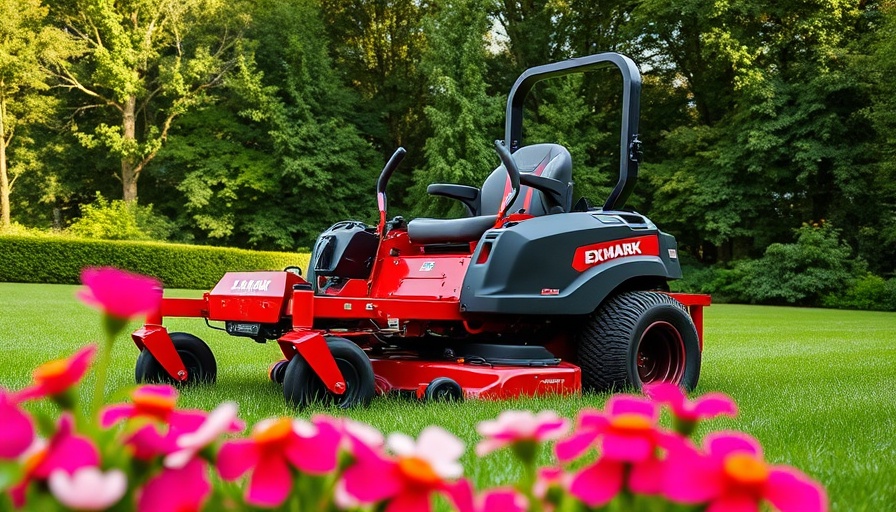
Modern Exmark Lazer Z E-Series redesign on display

The Rise of Exmark's Lazer Z E-Series: A Game Changer in Lawn Care

Exmark, a leading name in the landscaping equipment industry, has unveiled a significant redesign of its Lazer Z E-Series of zero-turn mowers. This model, which is the most affordable in the Lazer Z family, integrates over three decades of development to meet the demands of both residential and commercial users. The new design is tailored for homeowners or garden enthusiasts who seek reliability and performance without the high costs typically associated with top-of-the-line models.

Design Meets Efficiency

Jamie Briggs, Exmark's director of marketing, shared insights into the evolution of the Lazer Z E-Series, originally launched in 1995. He noted that today’s customers prioritize effective performance, enhanced cut quality, and durability while avoiding unnecessary features. The latest iteration of this mower features cutting decks available in 48-, 52-, or 60-inches, equipped with a redesigned discharge chute that promotes an even distribution of clippings for a cleaner finish.

Empowering Users with Advanced Technology

Equipped with Kawasaki and Vanguard commercial V-twin engines, this model is the most powerful Lazer Z E-Series to date. Each engine option includes state-of-the-art heavy-duty canister-style cyclonic air filtration systems, resulting in less maintenance while boosting overall performance.

Comfort and Convenience Redefined

The Lazer Z E-Series also embraces user comfort with a newly designed suspension seat that reduces operator fatigue during extended use. Moreover, Exmark has simplified maintenance with a redesigned unibody frame, featuring maintenance-free sealed bearing spindles and two easy grease points, ensuring it requires zero in-season maintenance.

What This Means for Homeowners

For homeowners looking to maintain their lawns efficiently, the Lazer Z E-Series represents a strategic investment in both time and resources. With its emphasis on durability, user comfort, and low maintenance needs, this mower provides an attractive option for those ready to tackle their yard care challenges head-on. The combination of affordability and performance makes it a worthy contender for any homeowner’s toolkit.

In conclusion, the Lazer Z E-Series not only meets but exceeds expectations for lawn care equipment, blending innovation with practicality. Homeowners can confidently approach their lawn maintenance with this state-of-the-art mower.

Tree Care Tips & Landscaping

87 Views

Write A Comment

*
*
Please complete the captcha to submit your comment.
Related Posts All Posts
06.15.2026

Enhance Your Garden: 5 Eye-Catching Alternatives to Japanese Barberry

Update Eye-Catching Alternatives to Japanese Barberry That Every Homeowner Should Consider Japanese barberry, once a popular ornamental shrub, has faced increasing scrutiny due to its invasive nature. Homeowners looking to enhance their gardens while prioritizing sustainable choices can achieve beautiful landscapes with various alternatives. Here are five stunning options that not only rival the aesthetic appeal of Japanese barberry but also promote environmental health. 1. American Cranberrybush The American cranberrybush (Viburnum trilobum) offers lush foliage and attractive clusters of white flowers in spring, followed by vibrant red berries in the fall. These berries provide a food source for birds, enhancing local wildlife. 2. Winterberry Holly This deciduous holly (Ilex verticillata) is ideal for winter interest, displaying bright red berries that last long into the colder months. Notably, Winterberry requires both male and female plants to produce fruit, making it a delightful addition for those who wish to support pollination. 3. Red-Twig Dogwood Known for its striking red stems, red-twig dogwood (Cornus sericea) adds a pop of color throughout the year, especially in winter when its stems stand out against the snowy backdrop. It is also beneficial for erosion control, thanks to its extensive root system. 4. Oregon Grape The Oregon grape (Mahonia aquifolium) is an evergreen option that showcases attractive yellow flowers in spring, followed by blue berries in summer. This native plant thrives in shady areas, making it a versatile addition to your garden. 5. Spicebush Spicebush (Lindera benzoin) is a fantastic companion for those wanting to introduce native plant species into their landscaping. It offers fragrant yellow flowers in spring, followed by aromatic berries that attract pollinators and songbirds. Its foliage also turns a vibrant yellow in the fall. Cultivating a Sustainable Garden Choosing alternatives to Japanese barberry not only enhances the beauty of your garden but also supports local ecosystems. By selecting plants that provide food and shelter for wildlife, homeowners can make a significant impact on their environments. Join the Movement for Sustainable Gardening As homeowners increasingly understand the importance of biodiversity and native plant species, it's essential to make informed choices regarding landscaping. Consider one of these alternatives today to create a flourishing garden that respects the environment.

06.14.2026

Discover Why Golden Currant Is Essential for Pollinator Gardens

Update Why Golden Currant Is a Must-Have for Your Garden Golden Currant (Ribes aureum) is a remarkable native shrub that captivates both homeowners and pollinators alike, establishing itself as a perfect choice for environmentally conscious gardening. This drought-tolerant plant is not only beautiful but also functional, attracting a variety of beneficial wildlife to your garden. A Versatile and Resilient Addition This upright shrub typically reaches a height of 6-10 feet and can spread 5-10 feet wide, making it a prominent feature in any landscape. Its glossy green leaves provide a vibrant backdrop for the stunning golden flowers that bloom from April to June, often emitting a faint yet delightful fragrance reminiscent of cloves or vanilla. Beneficial insects, such as hummingbirds, butterflies, and bees, are drawn to these flowers, further enhancing the biodiversity of your garden. Moreover, Golden Currant produces small edible berries in late summer that attract birds and small mammals. Support for Pollinators and Other Wildlife By planting Golden Currant in your backyard, you're not just adding aesthetic appeal; you're creating a sanctuary for pollinators. This plant's flowers are especially important for the early spring flyers, while its fruits serve as a food source in late summer when other resources become scarce. Through its unique design and ecological benefits, Golden Currant also cultivates an interest in sustainable gardening practices. As more homeowners become aware of the importance of supporting local ecosystems, this shrub provides the perfect solution, easily thriving in various conditions from full sun to partial shade. Ready to Grow Your Pollinator Garden? In addition to its resilience against drought, Golden Currant is also forgiving of poor soil conditions, making it a low-maintenance choice for homeowners. The shrub can flourish in a range of soil types, from dry to wet, and is known to adapt well to changing climates, ensuring your garden will remain vibrant despite future environmental challenges. Consider intermingling this shrub with evergreens in hedgerows or using it as a focal point in your pollinator garden. Its bushy stature can also serve as a natural privacy screen, giving you both beauty and utility in your outdoor space. As you explore ways to enhance your garden, remember the crucial role plants like the Golden Currant play in supporting local ecosystems. Start incorporating this native gem into your landscape today to create a thriving habitat for both plants and pollinators!

06.13.2026

Unveiling the Best New Perennials from Chicago Botanic Garden Trials

Update Discover the Best New Perennials from the Chicago Botanic Garden TrialsFor homeowners eager to enhance their gardens, perennials offer a reliable and vibrant palette that returns year after year. The Chicago Botanic Garden (CBG) plays a pivotal role in bringing attention to must-have perennial plants through its rigorous plant evaluation trials. These trials assess various species for their adaptability, disease resistance, and ornamental appeal, making gardening choices much easier for the average gardener.Why Plant Trials MatterPlant trials, such as those conducted at CBG, are essential because they provide gardeners with reliable guidelines on which plants perform best in specific regions. With over 1,200 taxa evaluated, the insights offered help to mitigate disappointment and take the guesswork out of choosing plants. Richard Hawke, the director of ornamental plant research at CBG, emphasizes that regional evaluations allow for informed decisions that suit local garden conditions.Highlights from Recent TrialsAmong the standout plants featured in the recent trials are:Baptisia Decadence ‘Lemon Meringue’: This perennial dazzles with its bright yellow blooms atop dusky stems, thriving in various conditions.Amsonia ‘Blue Ice’: A low-maintenance groundcover that blooms longer than typical blue stars, this beauty has garnered attention for its hardiness and charm.Hibiscus ‘Midnight Marvel’: Known for its rich foliage and large, striking blooms, this plant excels in the summer heat, making it a favorite among trial managers.These plants not only enhance aesthetic appeal but also support local wildlife, particularly pollinators, which are crucial to ecosystem health.Maximizing Your Gardening SuccessWhen considering new perennials for your home garden, it's advisable to evaluate your space carefully, understanding the soil and light conditions as well as maintaining a healthy watering schedule. Utilizing resources like CBG's evaluation reports can provide extensive insights into selecting plants that will flourish in your specific area.Moreover, exploring local nurseries and plant specialty stores can yield insights from professionals who understand which perennials perform best in your region, ensuring that you make choices that not only beautify your space but thrive within it.Join the Gardening CommunityEngaging with local gardening clubs or online forums can enrich your planting experience, providing access to tips, tricks, and shared experiences that enhance your journey as a gardener. Surrounding yourself with enthusiasts can expand your knowledge base and keep you motivated to experiment with new plants.

Terms of Service

Privacy Policy

Core Modal Title

Sorry, no results found

You Might Find These Articles Interesting

T
Please Check Your Email
We Will Be Following Up Shortly
*
*
*