







Add Row
Add Element
Tree Guardian News
update
Tree Guardian News
update
Add Element
  • Home
  • Categories
    • Storm Shield
    • Roots & Routes
    • Disease Detective
    • Insurance Intel
    • DIY Arborist
    • Futureproof Foliage
    • Pro-Partner Spotlight
    • Arborist Stories
    • Tree Care Blog
    • Tree Guardian News Blog
SUBSCRIBE TO NEWSLETTER 
  • update
  • update
  • update
  • update
  • update
  • update
  • update
March 28.2025
2 Minutes Read

Bristol Community Farms Celebrate Resilience Amid Funding Cuts

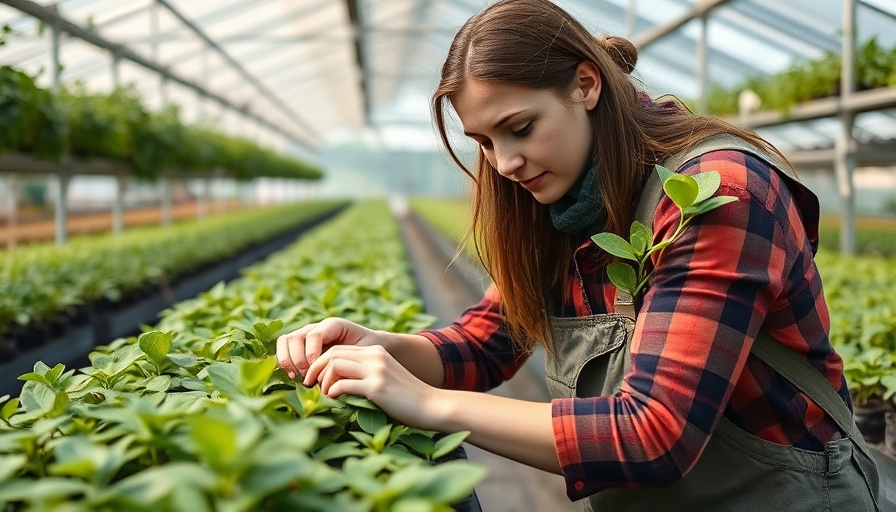
Farmer tending plants in Bristol community farm greenhouse

Joyful Resilience in the Face of Adversity

Despite the recent shock of funding cuts, Bristol’s community farms are determined to hold a “joyful celebration” at Sims Hill Shared Harvest. This community-supported agriculture model has garnered attention not just for its ecological farming but also for its community engagement. The collective strength and commitment of these local farmers are profoundly inspiring, especially when faced with significant setbacks.

The Ups and Downs of Small Scale Farming

Following a major victory in July 2024, when farms under five hectares were finally recognized for the Sustainable Farming Incentive, the abrupt closure of subsidy applications on March 10 has left many growers reeling. The farming community, which typically relies on these funds to support sustainable practices, is searching for alternative means to ensure their operations continue. The financial implications for small farms like Sims Hill are stark, particularly when they calculate a loss of over £1000 that could have significantly impacted their operational capacity.

Community Impact and Emotional Resilience

Sims Hill provides more than just organic produce; it fosters community connections through vegetable box subscriptions and volunteer days. The emotional toll of losing expected funding is compounded by the community's dependence on their outputs. According to Bekki Pugh of the Connecting with Nature program, the need for strong local food systems has never been clearer. The work they do reduces isolation and enhances community cohesion, a vital aspect of mental health recovery for many members.

What’s Next for Bristol’s Farms?

As Bristol’s farming community looks toward the future, they embody resilience and adaptability. While the current financial and regulatory landscape remains uncertain, the collaborative spirit and determination among growers is palpable. They are exploring partnerships and local fundraising opportunities to bolster their sustainability efforts. If these farms can rally community support, they may yet thrive against the odds.

As local homeowners, consider investing in your community’s food systems by choosing to support these farms through subscription services or volunteer opportunities. Join the movement toward sustainable agriculture while nurturing local connections that keep our community vibrant.

Futureproof Foliage
Facebook Twitter

83 Views

Write A Comment

*
*
Related Posts All Posts
01.30.2026

Navigating the Balance: The Creature in the Machine and What It Means for Homeowners

Update The Unseen Balance of Humanity and Technology In an age where technology often eclipses our physical existence, discussions around the role of humanity within our mechanized world are becoming increasingly vital. Nate Hagens, in his recent episode titled The Creature in the Machine, invites listeners to reflect on his personal journey following knee surgery, prompting a deeper consideration of our embodiment within a society that increasingly values cognitive labor over physical reality. Hagens' insights mirror a broader critique of technological determinism, suggesting a tension between the benefits of modern medicine and its energetic costs. Indeed, the charm of advancements such as minimally invasive surgeries often blinds us to the environmental and economic impacts that accompany these technological marvels. As he juxtaposes Tolkien’s Fellowship of the Ring with Kingsnorth’s Against the Machine, the essence of humanity stands in stark contrast to a system that seeks to reduce lives to mere components of a superorganism. Finding Humanity Amidst the Machine What does it mean to retain our humanity—our embodied essence—while immersed in vast economic frameworks? This question is increasingly relevant as we navigate a post-peak carbon world where political disillusionment is rampant, and social fragmentation appears inevitable. Hagens’ dialogue encourages us to embrace our biological “creaturehood” even as we navigate through technological interfaces. Furthermore, it implores us to examine how gratitude for modern capabilities intersects with moral responsibilities. Engaging with the Emotional Costs of Technology When we consider the advances in technology and the accompanying cultural shifts, it’s crucial to recognize the emotional and human costs that often accompany these developments. We are often left questioning, at what point does our reliance on devices and systems overshadow our inherent capacities for connection and agency? Noticing this can help us mitigate any potential resentment towards technological advancements. Practical Steps Towards Staying Human To actively cultivate a more human-centered approach in a technologically dominated world, individuals—and particularly homeowners whose spaces reflect their values—can implement practices that foster emotional connections and community engagement. Creating environments that encourage outdoor interactions, such as tree care and gardening, assists in rooting us in our physicality and surroundings, providing a tangible counterbalance to virtual realities. What the Future Holds: A Call to Action As we consider the implications of Hagens' reflections and the critiques presented through the lenses of technological criticism, it has never been more pressing to engage in practices that prioritize our humanity. Grounding ourselves within our environments promotes a balance between technological benefits and the preservation of emotional and social ties. Homeowners are uniquely positioned to model this balance—embracing tree care not just as a hobby, but as a vital part of creating a more human-centered community. By actively participating in the essence of life through nature, we can resist the pressures that seek to fragment our biological connection to the world. Take part in this journey by exploring how your space can nurture both greenery and community, reminding us that we are, fundamentally, creatures entwined with everything around us.

01.29.2026

Why Understanding Agrarianism and Tree Care Matters for Homeowners

Update Revisiting Humanity's Agricultural Roots In an era where modern dilemmas often dominate our attention, it can be beneficial to take a step back and examine the roots of human civilization. A recent exchange between Chris Smaje and physicist Tom Murphy sheds light on the deep historical implications of agrarianism and its lasting impact on our society's trajectory. While ecomodernists celebrate technological advancements as the source of human happiness, anti-modernists, exemplified by Smaje, argue that profound societal challenges trace back to our earliest interactions with agriculture. The River Metaphor: A Journey with No Easy Exits Tom Murphy introduces a powerful metaphor of civilization as a river that began as a gentle stream but has turned into a torrent, carrying humanity towards potential collapse. This perspective resonates with Smaje, who reflects on how societal structures like property rights and hierarchies may have existed long before agriculture came into play. These dynamics challenge the narrative that farming directly caused societal woes and compel us to reassess how we view our cultural evolution. Contrasting Views on Farming and Foraging A common dichotomy between foraging and farming creates oversimplifications of human history. The reality is that many historical farming societies frequently engaged in foraging practices, as discussed in scholarly works like Boehm's Hierarchy in the Forest. Understanding this interplay can illuminate contemporary conversations around sustainable practices in tree care and land stewardship, which are vital for today’s homeowners looking to cultivate resilient environments. Are We Bound by the River? This philosophical debate raises questions about fate and choice. Smaje suggests that while we may indeed feel swept along by the trends of history, there exists potential for deliberate change through locally-focused agrarian practices. This idea has implications not only for the agricultural sector but also for how homeowners engage in tree care, enabling them to forge sustainable bonds with nature rather than simply resisting its pull. A Look Toward the Future As our understanding of agricultural impacts continues to evolve, there's a pressing need to envision a future that embraces low-impact agrarianism. Homeowners and communities can play a crucial role in this movement, advocating for practices that emphasize local resources and minimize environmental harm. The discourse surrounding agrarianism, its history, and its implications for modern society emphasizes the importance of informed decision-making at the community level. By understanding where we came from, we better equip ourselves to navigate the turbulent waters of our current river of civilization. Engaging in practices that prioritize sustainability, such as tree care and local farming methods, can help to redirect our path toward a more viable future.

01.28.2026

Why Homeowners Should Embrace the Being Way of Degrowth

Update Degrowth: A Fundamental Shift in ThinkingAs we stand at the crossroads of environmental degradation and personal well-being, the concept of degrowth emerges as a poignant answer to the relentless pursuit of economic expansion. It represents a transformative journey, not just at a systemic level but deeply personal. With each passing day, more individuals recognize that their economic choices reflect a much broader societal pattern. Finding peace in a world fixated on productivity often requires stepping back to embrace the 'Being' consciousness as opposed to the 'Doing' ethos of capitalism.The Personal Journey of DegrowthJane W. Wang’s personal reflections on her experience with degrowth underscore the notion that true transformation begins within. After grappling with health challenges, she embarked on a journey of introspection, which prompted her to question the frenetic pace of modern life. Much like Wang, many people find themselves overwhelmed in the constant chase for achievement, often leading to burnout. Recognizing the need for slowing down offers an opportunity to explore the connections between our economic structures and personal well-being.Connecting with Nature: The Vital Role of Tree CareAt the core of embracing a degrowth mindset is a reconnection with nature, particularly through activities such as tree care. Homeowners can take initiative in their own backyards by engaging in sustainable practices that promote biodiversity and provide personal satisfaction. Caring for trees not only enhances our environment but fosters a sense of community and shared responsibility, mirroring many core values of the degrowth philosophy.Finding Balance: Between 'Doing' and 'Being'The irony in the push for degrowth often appears when advocates immerse themselves in activism, inadvertently replicating the 'Doing' mentality they wish to escape. The essence of Being calls for a transformative shift where individuals practice awareness and actively engage with life, grounded in love and empathy rather than anxiety and competition. By sharing personal stories and extending compassion, we illustrate the potential power of self-motivated change.The Collective Responsibility of Living DegrowthYet, achieving a degrowth society is not solely an individual journey; it requires a collective awakening to the societal structures that contribute to our collective state of unease. The concept of deepgrowth helps illuminate pathways through which our inner transformations can catalyze broader societal shifts. It emphasizes that personal changes can influence collective actions and vice versa, demonstrating that while our journeys may be private, their impacts can resonate widely.Embracing Lifestyles of Abundance within LimitsIn our journey towards creating a degrowth society, we must understand that reducing consumption doesn’t equate to deprivation. Instead, it opens up opportunities for new forms of abundance—cultivating a rich life through meaningful connections and experiences rather than accumulating material goods. Such transformations highlight the fulfilling nature of simplicity: a journey of self-discovery that brings immense joy in its wake.Call to Action: Live the Change You Wish to SeeIn this era where climate action and personal health are inextricably linked, it is vital for homeowners to embody degrowth principles. Start small: engage in tree care, support local sustainability initiatives, and share your journey with others. Together, as we embrace simplicity and foster connection with our environment, we step towards a restored balance within ourselves and our communities. Let’s be the change we wish to see.

Terms of Service

Privacy Policy

Core Modal Title

Sorry, no results found

You Might Find These Articles Interesting

T
Please Check Your Email
We Will Be Following Up Shortly
*
*
*